Why binding matters for print quality and usability
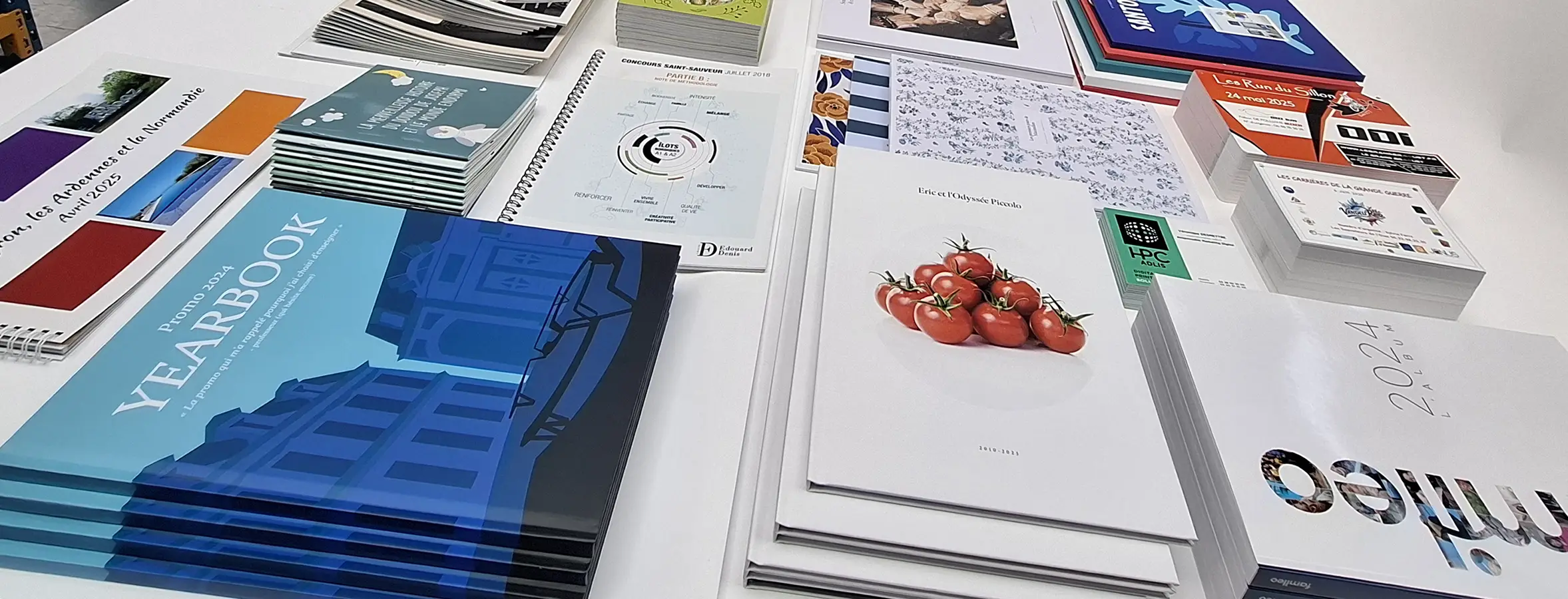
When printing a document, most attention is given to the paper, visuals, or finishing touches. However, understanding the different bookbinding types is just as crucial. As a key structural element, the right binding not only enhances the appearance but also improves the usability and durability of your printed materials.
The type of binding significantly influences the final look and feel of your document—both aesthetically and functionally. Factors such as size, page count, frequency of use, and the image you want to convey determine the best binding option. Carefully chosen, the binding enhances your content and strengthens its impact.
Whether you are creating an annual report, photo book, commercial brochure, or technical guide, each binding method offers specific advantages. Here is an overview of the main types of bookbinding and their most suitable uses.
Wire-O binding: practical, simple, and comfortable
Why choose Wire-O or spiral binding for your documents?
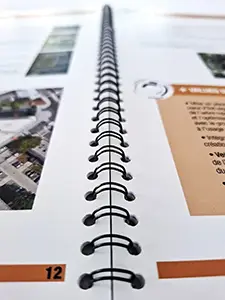
Wire-O binding, also called spiral binding, comb binding, metal rings, or WireBind, is popular for its ability to lay perfectly flat when opened.
Ideal for: notebooks, personalized journals, wall calendars, children’s books, product catalogs, technical manuals, cookbooks, sales documents, brochures, portfolios, lookbooks, and educational materials.

Benefits for daily use
Wire-O binding uses metallic loops to assemble pages. The number of pages depends on wire diameter and paper weight. With a large wire and lightweight paper, you can bind hundreds of pages.
Its 360° opening ensures smooth and comfortable handling—perfect for frequently used documents. Durable and cost-effective, Wire-O is quick to produce and available in a wide range of materials and colors—making it perfect for those who want a binding that is both practical and visually appealing.

A versatile solution for a wide range of projects
Wire-O stands out for its flexibility: it works for thin or thick documents, making it ideal for internal presentations, technical manuals, daily-use books, or small-batch customized materials. It supports all types of paper and gives documents a modern, professional look.
Saddle stitch binding: economical and efficient
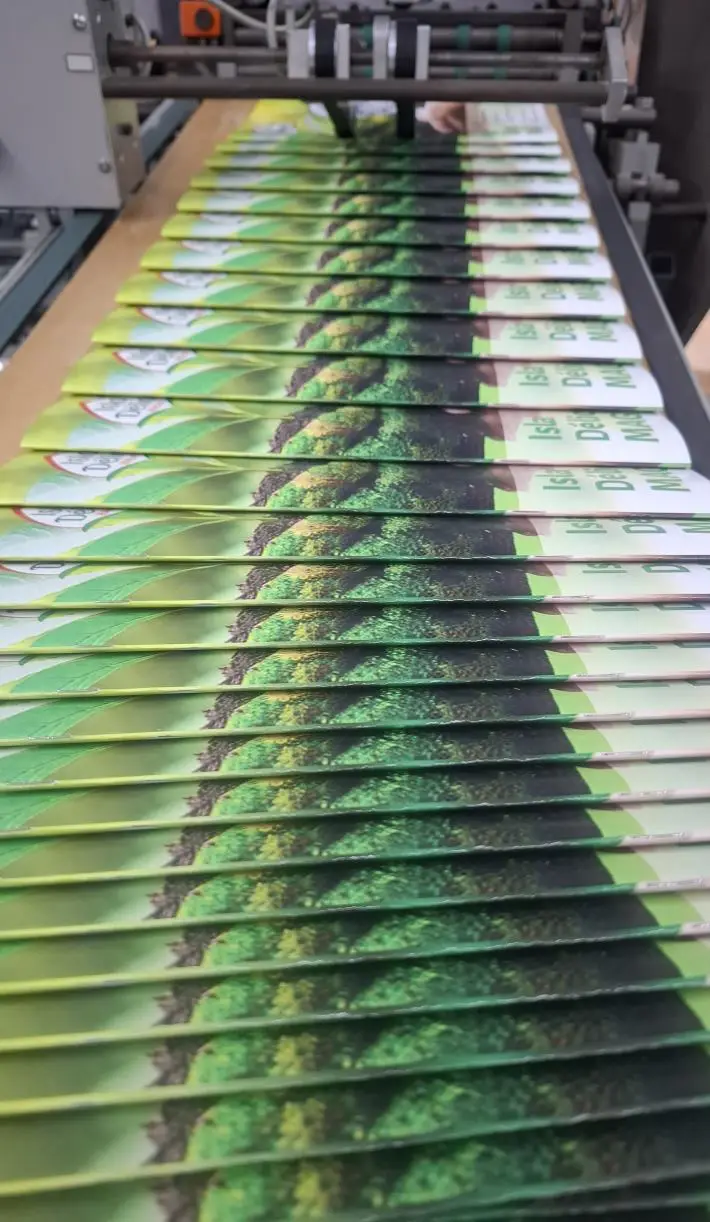
A quick and budget-friendly solution
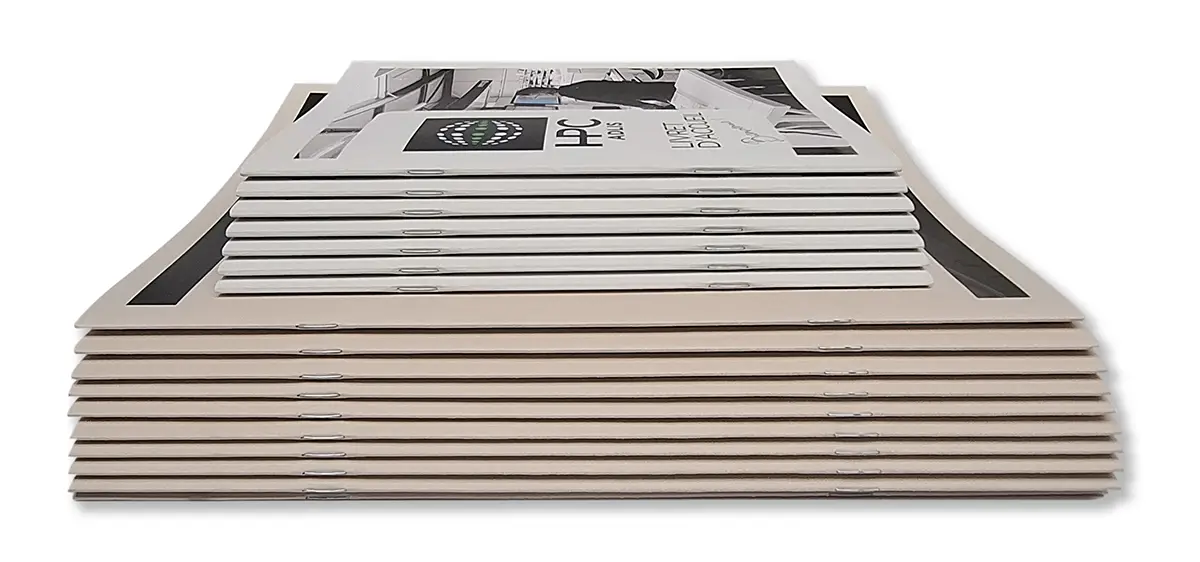
Also known as two-point metal stapling, saddle stitch binding is among the simplest and most cost-effective binding methods. Two metal staples secure folded sheets at the spine.
Thanks to its fast production time, this method is widely used for promotional brochures, municipal newsletters, quarterly magazines, event catalogs, or fanzines. It is ideal for documents under about 52 pages, depending on the paper weight (52 pages – 90 gsm coated / 115 gsm uncoated offset).
- Page counts must be multiples of four. Example: a 16-page brochure will typically include 12 inside pages + a 4-page cover.
- You can mix different papers for the cover and inside pages for a premium look at a lower cost.
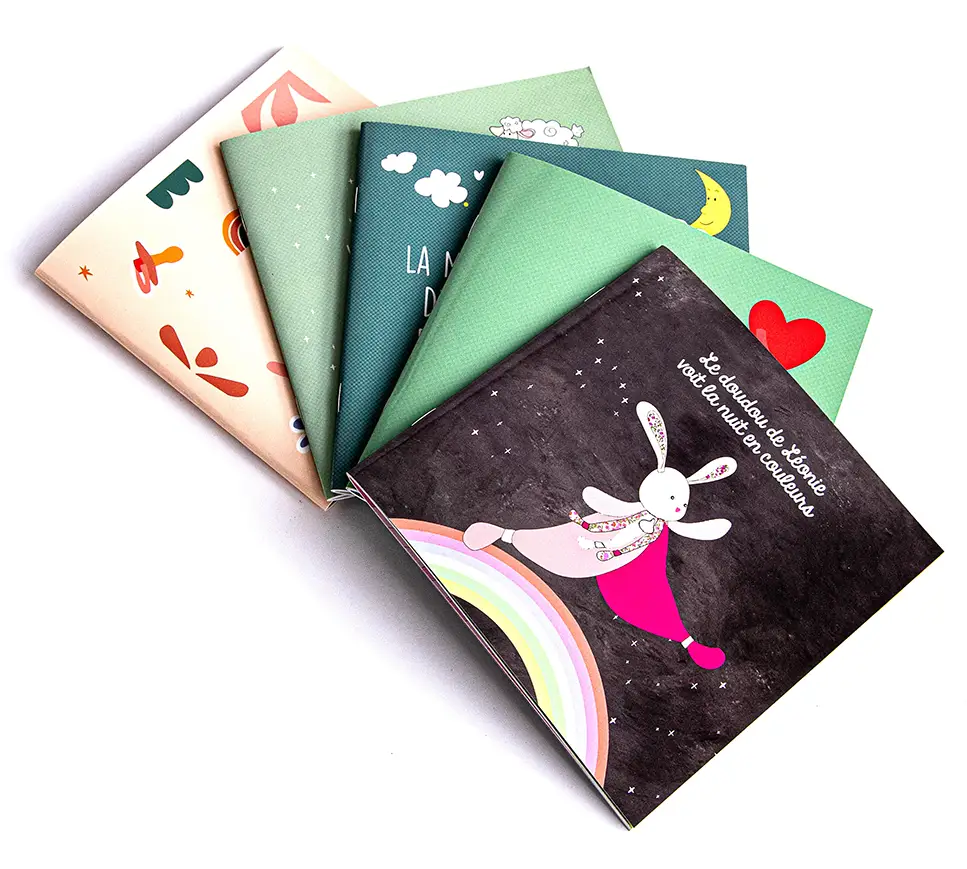
Perfect for large-distribution printed materials
-
Suitable for large print runs without impacting your budget.
-
Fast production for short turnaround projects.
-
Comfortable reading, easy opening, stable documents.
-
Ideal for short-lived but professional and practical materials.
PUR perfect binding: strength, precision, and a professional finish
Long-lasting binding for high-quality books
Highly regarded in professional printing, PUR perfect binding provides a reliable and elegant solution for books requiring excellent durability. Pages are gathered, lightly notched for better adhesion, and hot-glued into a straight-backed cover (soft or hard).
This technique produces a compact, perfectly aligned block that combines robustness and high-quality finishing.
Perfect for: high-pagination projects such as textbooks, travel guides, magazines, comic books, photo books, commercial catalogs, planners, or premium brochures.
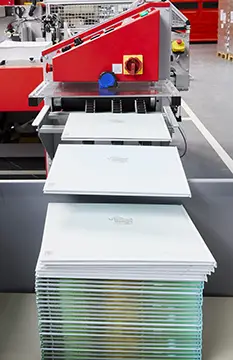
The strength of PUR adhesive
PUR perfect binding stands out for its use of exceptional performance adhesive. PUR (Polyurethane Reactive) glue penetrates deeply into paper fibers, even on coated or varnished stocks, ensuring long-lasting adhesion. Combining with notching (theses fine cuts made along the spine) improves the binding strength.
Perfect for daily-use documents
PUR perfect binding offers remarkable strength and withstands temperature changes, humidity, and frequent opening and closing. This binding technique maintains its integrity without compromising either the aesthetics or the reading comfort. Pages remain firmly attached, even after extensive use.
It allows hundreds of pages to be bound with a clean, uniform finish.
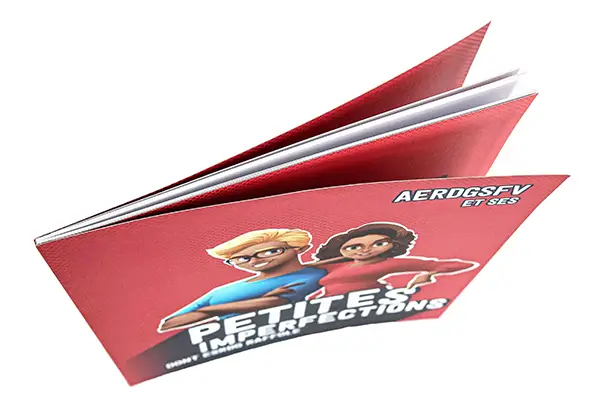
Premium finish for demanding projects
Beyond its robustness, PUR perfect binding supports numerous finishing options: matte or gloss lamination, spot UV varnish, foil stamping, and more. Ideal for premium personalized photo books, large catalogs, professional publications, or any high-end printed work where perceived quality and durability are essential.
Thanks to this enhanced reliability, PUR perfect binding is a trusted choice for your long-lasting printed documents.
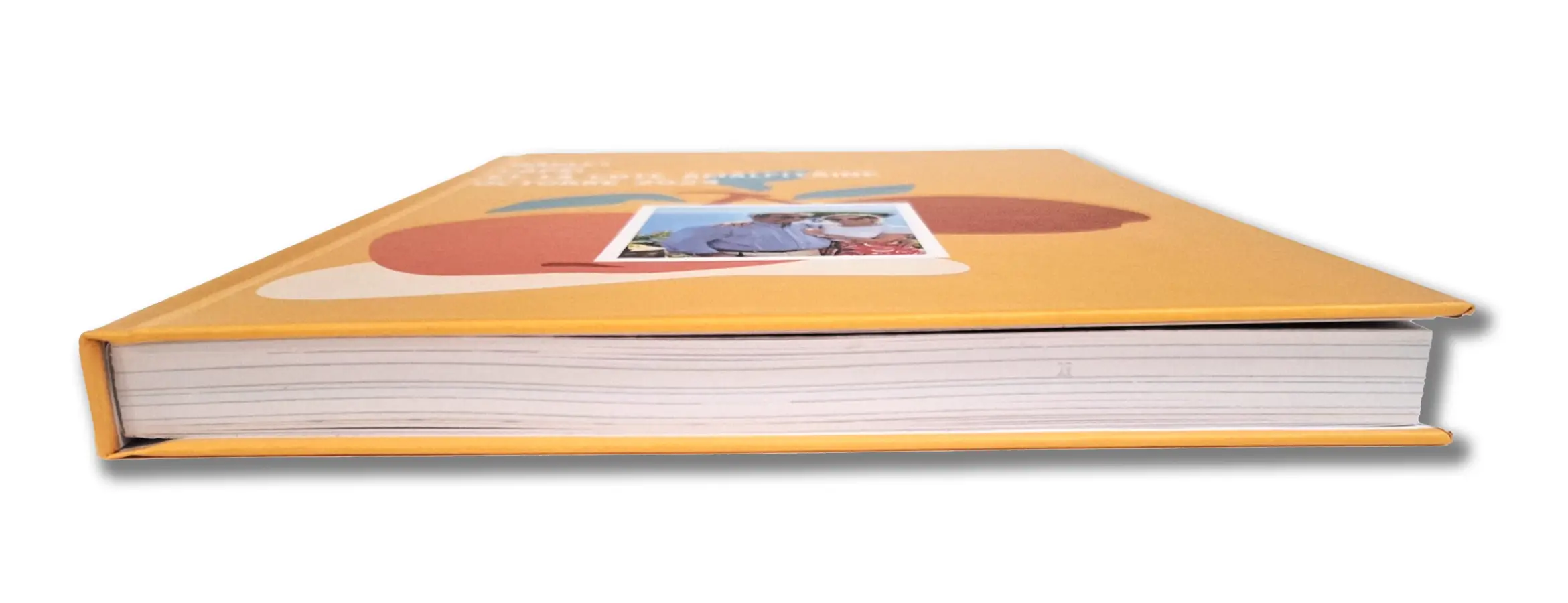
Layflat binding: perfect flat opening for photo books and premium albums
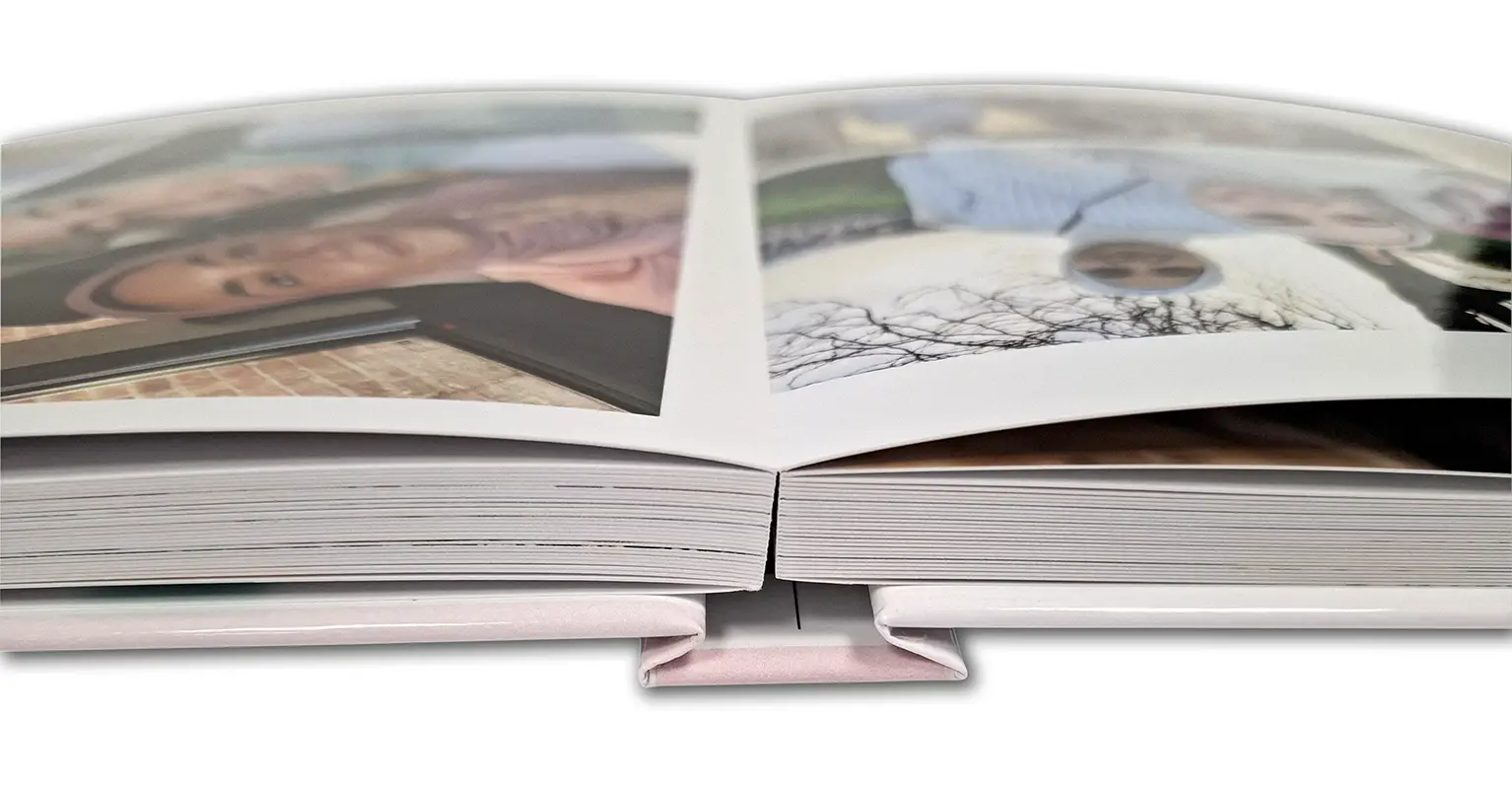
A seamless 180° layflat binding
Layflat—or flat-opening binding—allows pages to open fully at 180° without damaging the spine. It offers uninterrupted double-page spreads, ideal for panoramic photos, immersive visuals, or full-page graphics.
- Each sheet is printed single-sided, then glued back-to-back with another sheet, creating thick, perfectly aligned pages for seamless double pages, with no visual break in the center.
- This high-end binding is especially popular among demanding publishers, professional photographers, and specialized pure players.
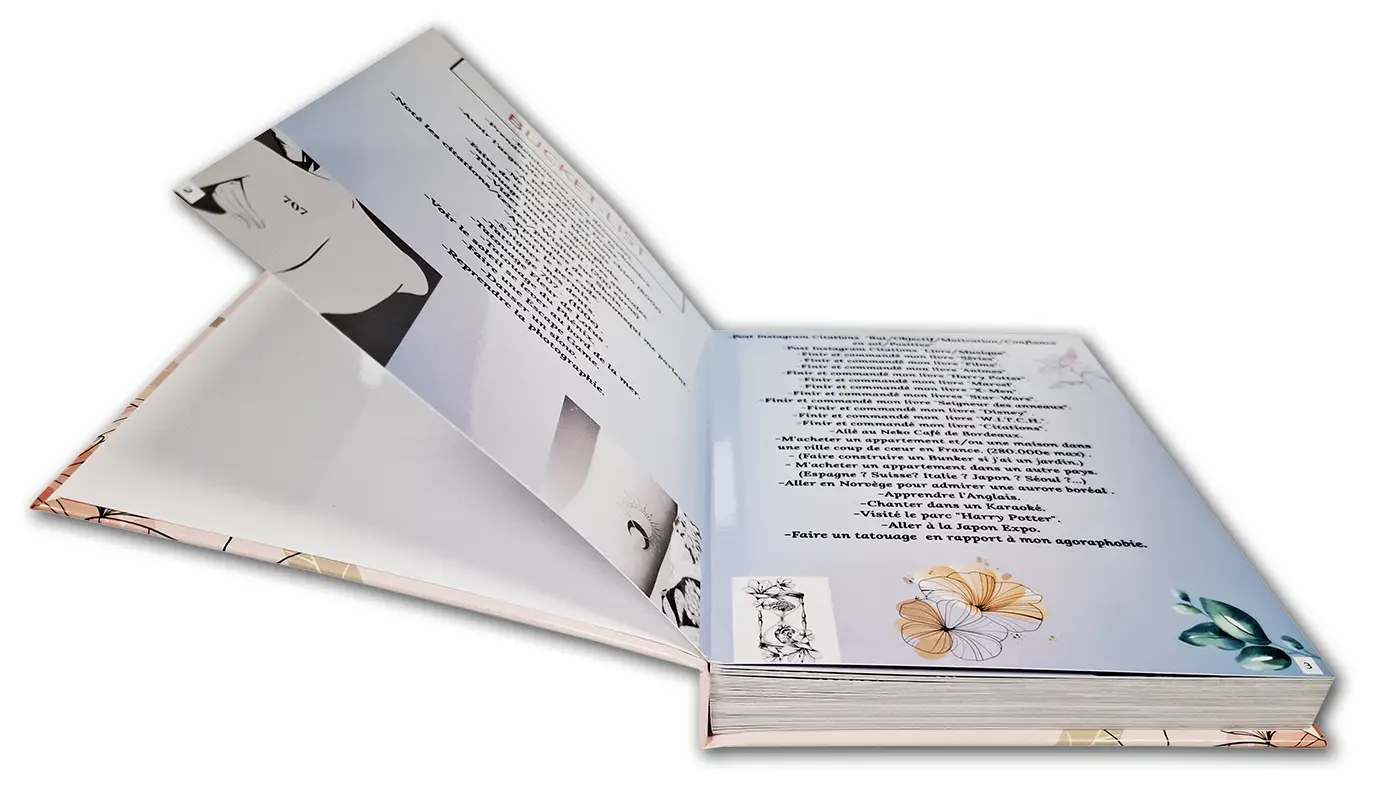
Ideal for Exceptional Projects
Layflat binding is the preferred choice for projects where image quality and visual impact are essential. Perfect for personalized photo albums, premium wedding books, artist portfolios, and illustrated children’s books.
Its refined appearance, outstanding reading comfort, and durability make it one of the most premium bindings on the market—perfect for emotionally or visually rich publications.
Would you like to request a quote or ask for information about printing your materials?
Hardcover or softcover: which to choose?
Hardcover: elegant, strong, durable
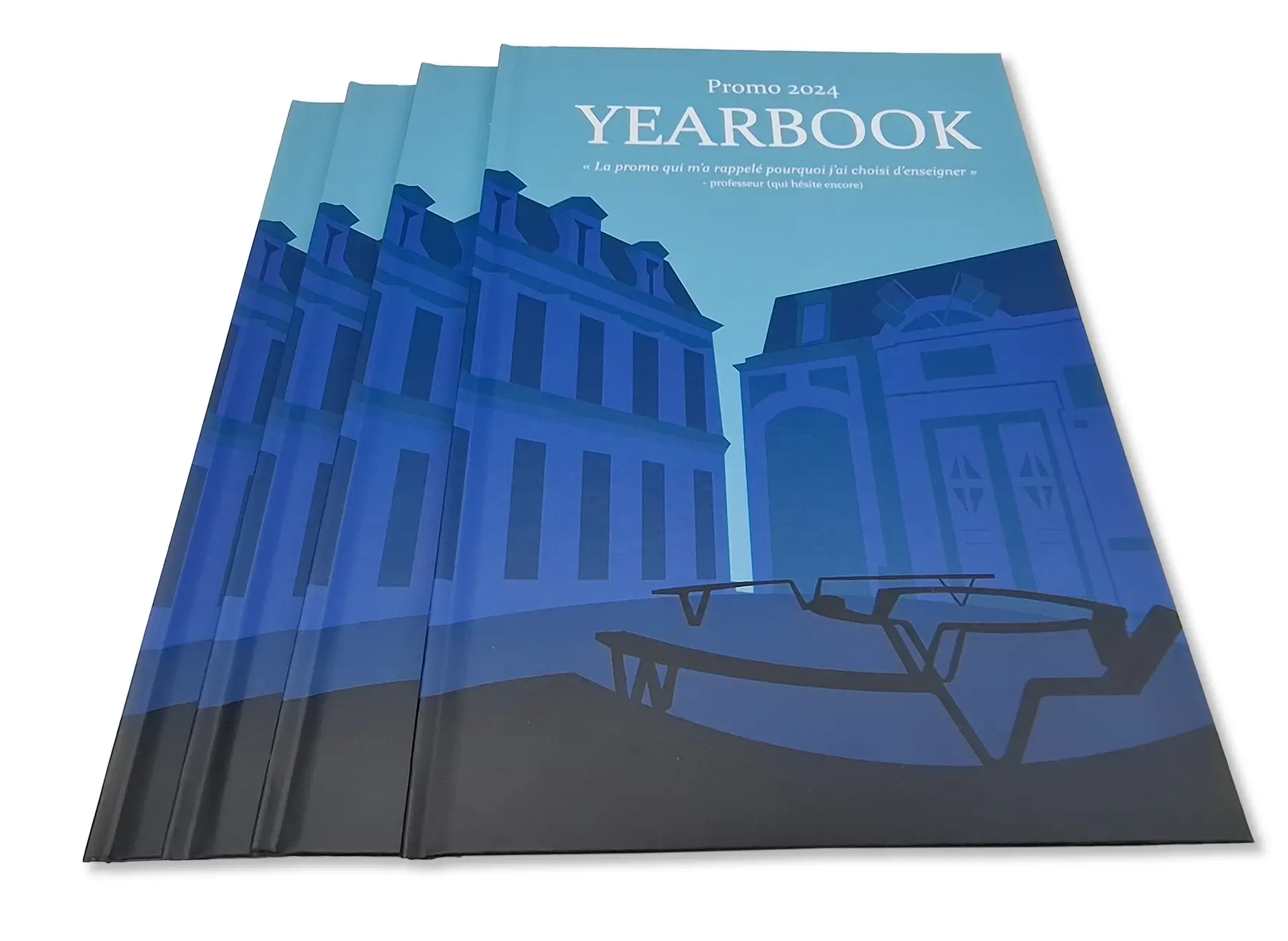
Also known as a casebound cover, this finish gives the book an elegant, sturdy, and long-lasting appearance. Ideal for projects requiring premium aesthetics and durability.
It pairs perfectly with PUR or Layflat binding and is widely used for photo books, comic books, children’s books, and collector’s editions.
Our hardcover is made from 170 gsm coated paper, laminated, and mounted onto thick board before being fitted onto the book block, typically bound with a PUR perfect binding.
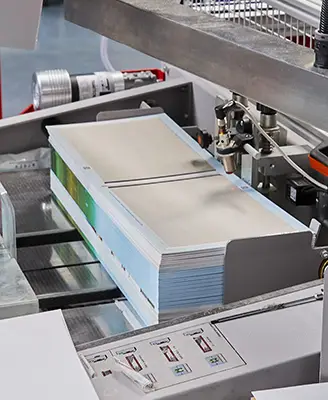
Casebinding: the art of fine finishing
Casebinding consists of wrapping a rigid board with laminated printed paper to form the book cover. This paper is first laminated (matte anti-scratch or glossy) to ensure an attractive and durable finish. This technique adds thickness, weight, and elegance while ensuring long-term durability.
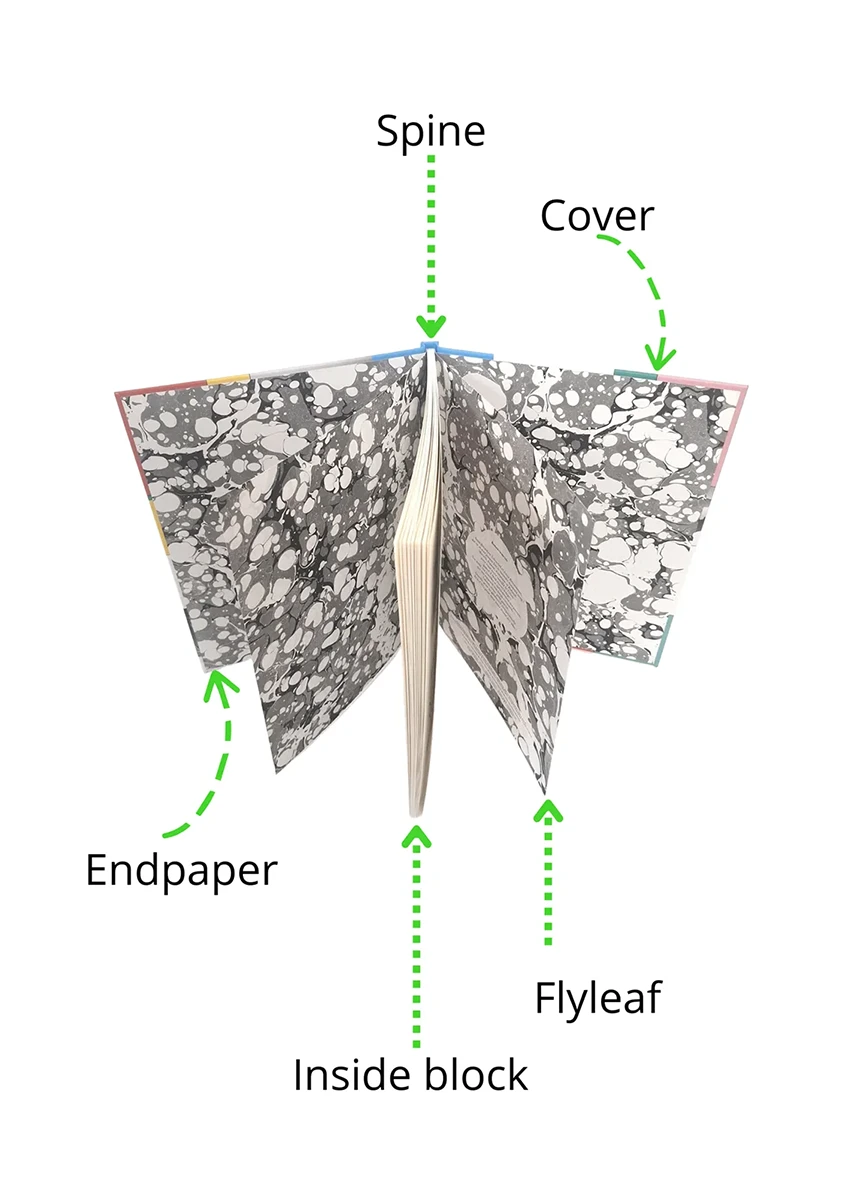
What makes up a hardcover book?
A hardcover book typically includes:
-
The book block, the endpapers and the flyleaf: include the printed pages, endpapers, and flyleaf, all bound with PUR perfect binding and attached to the hard cover. The flyleaf is the endpaper attached to the inside of the cover. It wraps around the book block and connects it to the hardcover.
-
The casebound cover, made of laminated printed paper mounted on solid board.
Advantages of hardcover binding
-
Enhanced protection against handling, shocks, and wear over time. It is an essential asset for books intended to last.
-
High customization potential with finishes like lamination, foil stamping, or spot UV. A true creative playground to bring your brand or editorial world to life.
Softcover: flexibility and lightness at lower Cost
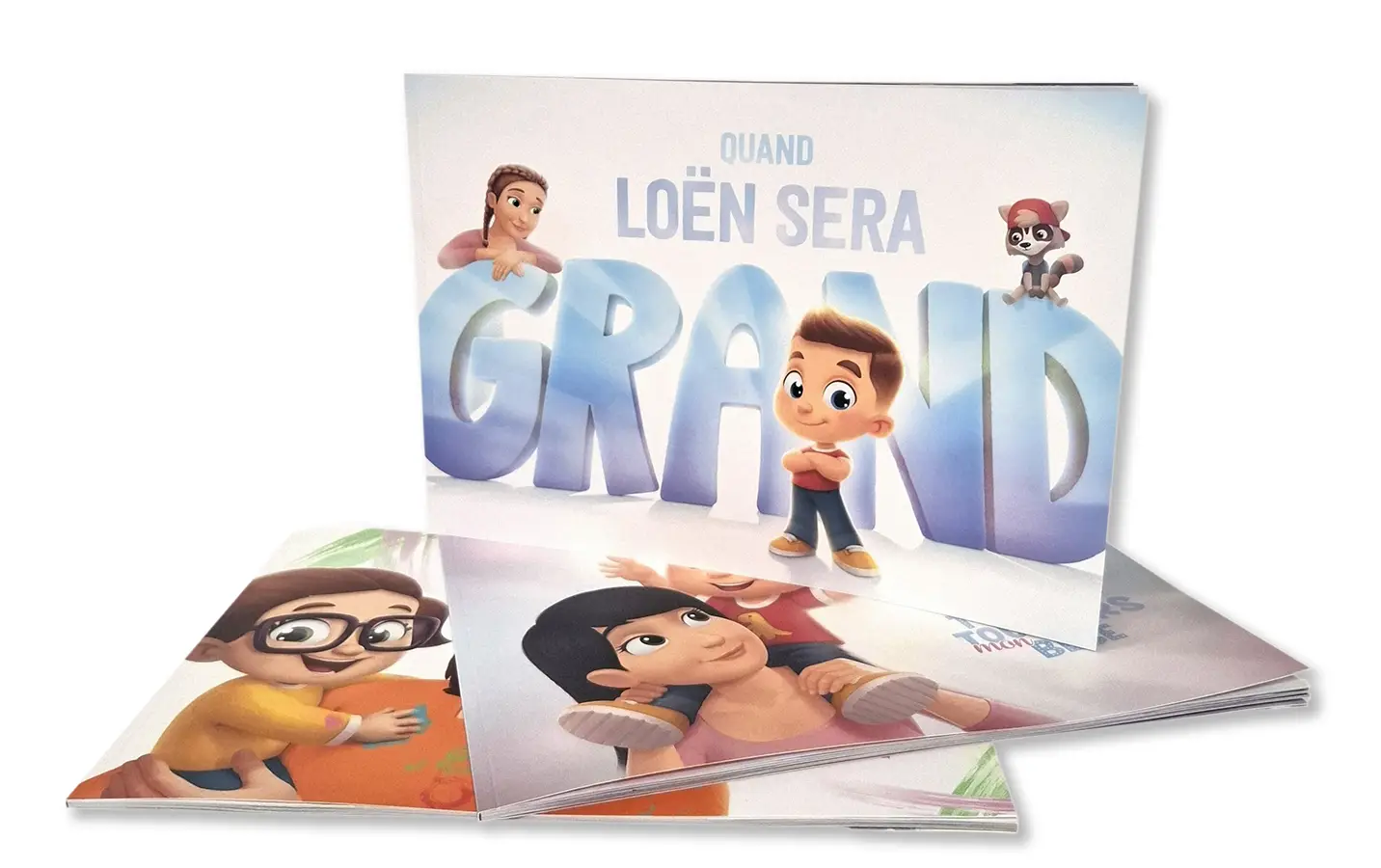
Softcover books are widely used across the publishing world. Lightweight, flexible, and easy to handle, they offer an excellent balance between cost, aesthetics, and practicality.
They are commonly used for children’s books, novels, travel guides, commercial brochures, magazines, and product catalogs.
Compatible with multiple binding options
Choosing a softcover allows you to vary the finishes according to your project:
-
Perfect binding: pages are glued at the spine into a soft cover—resistant and professional.
-
Saddle stitching: economical and fast—ideal for short brochures. It ensures low costs and fast production.
-
Wire-O or spiral binding: full 360° opening—perfect for manuals, notebooks, and learning materials.
Choosing the right binding for your project
-
Cost-effective and practical: the softcover is a cost-effective solution. It is also lighter, easier to transport, and often faster to produce.
-
Comfortable to read: thanks to its flexibility, it provides a comfortable grip and a smooth reading experience, ideal for frequently consulted documents or extended reading.
How to choose the best binding type
A strategic decision based on your objectives
Choosing the right binding depends on:
-
How your document will be used (occasional or intensive reading, wide or limited distribution)
-
Page count
-
Budget
-
The image you want to convey through your document
Each binding offers specific benefits: flat opening, long-term durability, premium look, cost efficiency, and more.
Impact on perception and longevity
The choice of binding should never be left to chance. Binding affects:
-
Reading experience (handling, comfort, lay-flat opening…)
-
Durability and overall quality
-
Perceived value of your publication
A high-end catalog, a keepsake photo book, and a technical manual all require different binding strategies.
Need guidance choosing the right binding?
Take some time to define your needs: usage frequency, quantity, expected quality, and distribution method.
Still unsure? Our team is here to guide you from design to finishing.
Would you like to request a quote or get more information about printing your materials?
DIGITAL
PRINTING
SOLUTIONS

DIGITAL
PRINTING
SOLUTIONS


© Tous droits réservés 2020 | HPC-ADLIS | Mentions légales | Créé par Agence Bradford
© Tous droits réservés 2020 | HPC-ADLIS | Mentions légales | Créé par Agence Bradford

